

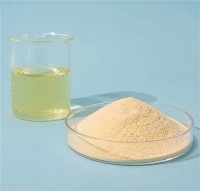


The dietary supplement industry is experiencing a profound shift toward scientifically backed, functional ingredients. Among the most sought-after compounds in the rapidly expanding nootropics and sports nutrition sectors is Phosphatidylserine (PS). For B2B buyers, supplement manufacturers, and product formulators, understanding the biochemistry, clinical efficacy, and sourcing specifications of Phosphatidylserine is essential for developing premium health products that meet modern consumer demands.
This comprehensive guide explores what Phosphatidylserine is, dives deep into the clinical research supporting its cognitive and physical recovery benefits, and provides a strategic sourcing guide for commercial application.
What is Phosphatidylserine?
Phosphatidylserine is a naturally occurring phospholipid, a type of fat molecule that is a structural and functional component of biological membranes. In the human body, it is predominantly concentrated in the brain, where it accounts for approximately 13% to 15% of the total phospholipid pool in the cerebral cortex.
On a cellular level, PS sits within the inner leaflet of the cell membrane. It acts as a cellular gatekeeper, regulating the transfer of nutrients into the cell and the expulsion of waste products. Furthermore, PS is crucial for cell-to-cell communication. It facilitates the release of essential neurotransmitters, including dopamine, serotonin, and acetylcholine, which are the biochemical messengers responsible for memory formation, mood regulation, and processing speed.
While the human body can synthesize Phosphatidylserine internally, the natural production rate declines significantly with age. Furthermore, modern Western diets provide inadequate amounts of PS (usually far less than the 130mg average daily dietary intake). This gap between biological need and dietary availability has driven massive commercial demand for Phosphatidylserine supplementation.
Core Functional Benefits: A Look at the Clinical Research
For commercial formulators, the marketability of an ingredient relies heavily on peer-reviewed clinical research. Phosphatidylserine is unique in the supplement space because it boasts robust efficacy data across two completely different, highly lucrative demographics: aging populations seeking cognitive preservation, and athletes seeking accelerated physical recovery.
1. Cognitive Improvement and Brain Health
The strongest and most historically documented application of Phosphatidylserine is in cognitive support. As brain tissue ages, cell membranes lose their fluidity, and neurotransmitter activity slows down. PS supplementation acts as a structural repair mechanism for these degrading neural pathways.
The FDA Qualified Health Claim Phosphatidylserine holds a rare distinction in the supplement industry. In 2003, the U.S. Food and Drug Administration (FDA) permitted two qualified health claims regarding PS:
"Consumption of phosphatidylserine may reduce the risk of dementia in the elderly."
"Consumption of phosphatidylserine may reduce the risk of cognitive dysfunction in the elderly." (Note: These claims require a disclaimer stating that the scientific evidence is limited, but possessing an FDA-qualified claim remains a powerful marketing asset for consumer-facing brands.)
Clinical Efficacy and Memory Recall Research interest in PS surged in the late 1980s and early 1990s. The landmark multicenter, double-blind, placebo-controlled study conducted by Cenacchi et al. (1993) evaluated 425 elderly patients with moderate to severe cognitive decline. Over six months, participants given 300 mg/day of PS demonstrated statistically significant improvements in memory, learning, and daily behavioral metrics compared to the placebo group.
More recent systematic reviews (such as those published in the Korean Journal of Food Science and Technology in 2022) analyzing plant-derived PS concluded that dosages ranging from 100 mg to 300 mg per day successfully support sustained attention, memory recall, and cognitive speed in older adults experiencing mild cognitive impairment.
2. Sports Recovery and Cortisol Blunting
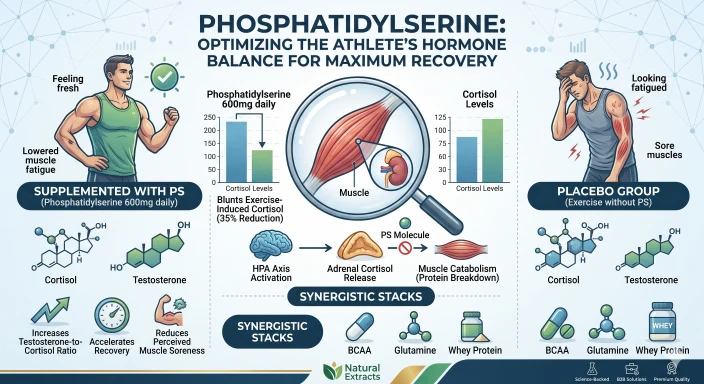
Beyond nootropics, Phosphatidylserine is rapidly gaining traction in the sports nutrition sector. High-intensity exercise triggers the hypothalamic-pituitary-adrenal (HPA) axis, leading to the secretion of cortisol-the body's primary stress hormone. While acute cortisol spikes are natural during a workout, chronically elevated cortisol leads to muscle catabolism (protein breakdown), weakened immunity, and delayed recovery.
Blunting Exercise-Induced Stress PS has been proven to act as a potent cortisol suppressant when dosed correctly. A definitive study published in the Journal of the International Society of Sports Nutrition (Kingsley et al., 2008) tested the endocrine response of healthy males to moderate-intensity exercise after supplementing with 600 mg of Soy-derived PS (S-PS) per day for 10 days.
The results were remarkable for sports formulation:
Cortisol Reduction: Mathematical area under the curve (AUC) calculations showed that the PS group experienced a 35% reduction in cortisol levels compared to the placebo group.
Peak Blunting: Peak cortisol levels post-exercise were 39% lower in the PS group.
Hormonal Optimization: Supplementing with PS significantly improved the testosterone-to-cortisol ratio (an increase of 184%), creating a highly anabolic environment ideal for muscle preservation and growth.
For athletes facing overtraining syndrome, Phosphatidylserine prevents the physiological deterioration that accompanies excessive physical stress, while simultaneously reducing perceived muscle soreness.
B2B Sourcing Guide: Specifications and Raw Material Selection
For procurement teams and contract manufacturers, selecting the right raw Phosphatidylserine is critical. The origin, extraction method, and concentration of the ingredient dictate both the product's safety profile and its commercial viability.
The Evolution of PS Sources
Bovine-Derived PS (Obsolete): Early landmark trials used PS derived from cow brains (bovine cortex). However, due to safety concerns regarding Bovine Spongiform Encephalopathy (BSE, or "mad cow disease"), bovine-derived PS is no longer commercially available or safe for human consumption.
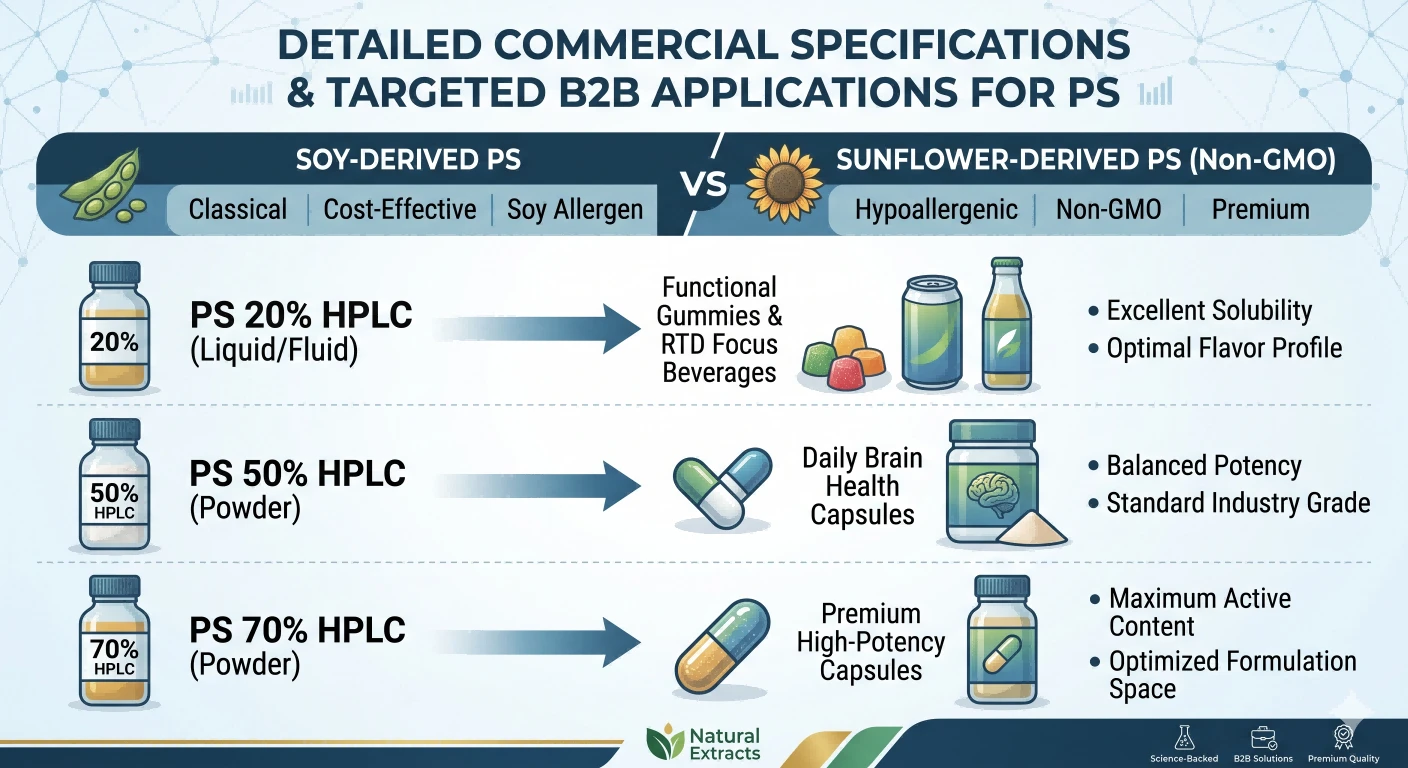
Soy-Derived PS (S-PS): This is currently the industry standard. Extracted from soy lecithin, S-PS is highly researched, cost-effective, and possesses a lipid profile that provides excellent bioavailability.
Sunflower-Derived PS: As consumer demand for hypoallergenic and non-GMO products surges, sunflower-derived PS has become the premium alternative. It is 100% soy-free, making it the preferred choice for allergy-conscious formulations.
Standard Commercial Specifications
When sourcing wholesale PS, manufacturers can select from several standard assays depending on the delivery format (capsule, gummy, beverage, or powder):
Phosphatidylserine 20% (Powder/Liquid): Frequently used in functional foods, gummies, and liquid beverages due to its solubility and ease of integration into complex matrices.
Phosphatidylserine 50% (Powder): The standard "sweet spot" for nootropic stacks and sports nutrition powders. It offers a strong balance between high active concentration and competitive pricing.
Phosphatidylserine 70% (Powder): A highly concentrated form utilized for premium dietary supplements, specifically in two-piece hard capsules where physical space inside the capsule is limited.
B2B Application Scenarios for Product Formulators
Because of its dual functionality, Phosphatidylserine is an incredibly versatile ingredient. B2B brands can leverage PS across multiple product categories:
1. Nootropic Stacks and Brain Health Formulas
PS is the foundational ingredient in premium brain health supplements. Formulators frequently combine 100 mg to 300 mg of PS with Ginkgo Biloba, Bacopa Monnieri, and Alpha-GPC. Because it operates mechanistically by repairing cell membranes, it acts synergistically with ingredients that stimulate blood flow or neurotransmitter production. When sourcing these complex profiles, integrating high-quality Natural Extracts is critical for maintaining formula efficacy and stability.
2. Post-Workout and Sports Nutrition Powders
To target the sports nutrition market, formulators are integrating 400 mg to 600 mg of PS into post-workout recovery formulas. By aggressively blunting the post-exercise cortisol spike, a PS-infused recovery powder protects against muscle catabolism and accelerates tissue repair. It is highly complementary when stacked with Branched-Chain Amino Acids (BCAAs), Glutamine, and Whey Protein isolates.
3. Functional Gummies and Beverages
The "pill fatigue" trend has driven consumers toward alternative delivery methods. Due to the availability of lower concentration (20%) PS in both fluid and powder formats, it is easily dispersed into pectin-based gummies or ready-to-drink (RTD) focus beverages aimed at students, gamers, and stressed professionals.
Conclusion
Phosphatidylserine is no longer a niche ingredient reserved for clinical settings; it is a scientifically validated, commercially viable powerhouse in the supplement industry. Its unique ability to cross the blood-brain barrier to combat age-related cognitive decline, paired with its proven capacity to regulate cortisol and accelerate sports recovery, makes it an indispensable asset for modern product formulation.
For B2B buyers and dietary supplement brands, navigating the sourcing of Phosphatidylserine-from choosing between soy and sunflower origins to selecting the correct concentration specification-is the key to unlocking this ingredient's immense market potential. By partnering with reputable raw material suppliers and adhering to clinical dosing standards (300 mg for cognition, 600 mg for sports recovery), brands can deliver life-changing efficacy to their end consumers.