

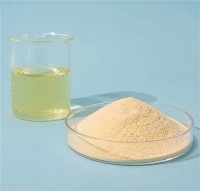


Modified Citrus Pectin Powder is used in various ingredient formulations, and its solubility and dispersion behavior can affect how easily it is incorporated into a finished product. For manufacturers and ingredient buyers, understanding these factors is important when evaluating raw materials, developing formulations, and establishing production procedures.
However, solubility is not determined by a single parameter. The characteristics of the Modified Citrus Pectin Powder itself, together with water temperature, addition method, mixing conditions, and formulation composition, can all influence the final result.
At Gold Kropn, we manufacture Modified Citrus Pectin Powder and help our customers understand the factors that affect its solubility, so they can select the right grade for their production needs.

1. Raw Material Specifications and Solubility
The specifications of Modified Citrus Pectin Powder can influence its hydration, dissolution, and dispersion behavior. When comparing suppliers, buyers should look beyond a general description such as "high solubility" and review the relevant product specifications.
Several parameters may be worth evaluating:
Molecular weight: Molecular weight can influence the hydration and flow behavior of pectin solutions. Modified Citrus Pectin is processed to alter the characteristics of conventional pectin, but the relationship between molecular weight and solubility depends on the specific material and processing conditions. A lower molecular weight alone does not guarantee faster dissolution in every formulation.
Degree of esterification (DE): The degree of esterification describes the proportion of galacturonic acid groups that are esterified. It affects pectin's physicochemical properties and interactions with other ingredients. Its influence on solubility should be assessed alongside other specifications rather than in isolation.
Purity and composition: Galacturonic acid content and other compositional characteristics can help buyers evaluate material consistency. Different compositions or residual components may affect hydration and behavior in a formulation.
Moisture content: Moisture can affect powder handling and storage stability. If a product absorbs moisture during storage, particles may aggregate, making the powder more difficult to disperse uniformly.
For B2B procurement, it is useful to compare these specifications across suppliers and confirm whether the material meets the requirements of the intended application. A Certificate of Analysis (COA) can help verify the reported parameters for a specific batch.
2. Powder Particle Size and Physical Condition
The physical condition of Modified Citrus Pectin Powder can affect how it behaves when added to water.
Fine particles generally provide a larger surface area for contact with water. However, very fine powders may also form floating clusters or agglomerates when their outer surfaces become hydrated before water reaches the inner particles.
Powder condition also matters. Material exposed to excessive humidity may form lumps, while differences in particle size distribution can influence powder flow and feeding behavior.
When evaluating a sample, buyers and formulation teams should consider:
- Whether the powder flows consistently during feeding.
- Whether visible lumps form during water addition.
- Whether the material disperses uniformly under the selected mixing conditions.
- Whether the same behavior can be reproduced across batches.
Particle size and powder condition should be considered alongside chemical specifications. A powder that is difficult to disperse does not necessarily have poor intrinsic solubility; the result may also reflect agglomeration or an unsuitable preparation method.
3. Water Temperature
Water temperature is another important process variable.
Temperature affects the rate of hydration and the movement of molecules in the liquid. Depending on the MCP grade and formulation, warmer water may help the powder hydrate more quickly or reduce the time needed to achieve a uniform mixture.
However, increasing the temperature does not automatically improve every aspect of dissolution. The response depends on the product's specifications, concentration, and the other ingredients present.
For production trials, it is advisable to compare several controlled temperature conditions while keeping the powder concentration, mixing time, and agitation method consistent.
Record the temperature at the point of powder addition, not just the initial water temperature. This helps ensure that results can be reproduced during scale-up.
Unless the supplier has provided specific preparation instructions, buyers should avoid assuming that one temperature range is suitable for every Modified Citrus Pectin Powder grade.
4. Powder Addition Method
How the powder is introduced into water can make a substantial difference to the final mixture.
Adding a large quantity of powder to one location in a short period can create a concentrated layer of hydrated material around dry particles. These clusters may be difficult to break apart, even with continued stirring.
A more controlled approach is to add the powder gradually into moving water, allowing the particles to separate and become wetted more evenly.
Depending on the formulation and equipment, useful practices may include:
- Starting the mixer before introducing the powder.
- Adding the powder slowly rather than all at once.
- Distributing the powder across the mixing zone where practical.
- Avoiding the rapid addition of large quantities to a single spot.
- Allowing sufficient hydration time before evaluating the mixture.
Some manufacturers may also evaluate pre-blending MCP with compatible dry ingredients to improve feeding and dispersion. Any such approach should be checked for compatibility with the formulation.
The most suitable addition method depends on the powder's physical characteristics, the batch size, and the available mixing equipment.

5. Mixing Equipment, Speed, and Hydration Time
Mixing conditions determine how effectively powder particles contact water and how evenly they are distributed throughout the batch.
Insufficient agitation may leave undispersed particles or localized concentrations of powder. On the other hand, simply increasing mixer speed is not always the best solution. Excessive agitation may introduce air, create foam, or complicate subsequent processing, depending on the equipment and formulation.
The type of mixer also matters. A laboratory overhead stirrer, a high-shear mixer, and an industrial tank agitator produce different flow patterns. A procedure that works well at laboratory scale may need adjustment for larger production volumes.
When developing a preparation procedure, consider:
- Mixing speed: Enough agitation is needed to distribute the powder without creating unnecessary air incorporation.
- Mixing time: The mixture may require additional time for hydration after the powder has been dispersed.
- Batch volume: Larger batches can have different circulation patterns and mixing efficiencies.
- Equipment design: Impeller type, vessel geometry, and powder feeding location can affect results.
For reliable scale-up, document the mixing equipment, speed, addition sequence, and hydration time. Evaluate the final mixture using application-relevant criteria, such as visible particles, uniformity, viscosity where applicable, and consistency between batches.
6. Solubility vs. Dispersion: What Should Buyers Check?
Solubility and dispersion are related, but they are not identical.
Solubility refers to a material's ability to dissolve in a liquid under specified conditions. Dispersion refers to how evenly particles are distributed throughout the liquid. A powder can appear evenly distributed for a short period without being fully dissolved, while agglomerates may remain even when the material itself has soluble components.
For procurement and quality evaluation, this distinction matters. A visual inspection alone may not be enough to determine whether a batch meets the requirements of a particular application.
Before approving a Modified Citrus Pectin Powder supplier, buyers should consider the following checks:
- Confirm the product grade and relevant specifications.
- Define the water temperature, concentration, and mixing procedure used for evaluation.
- Record the time required to achieve the required degree of uniformity.
- Observe whether visible lumps or undispersed particles remain.
- Assess viscosity, appearance, or other properties when relevant to the application.
- Compare results using the same preparation method across samples or batches.
If dissolution performance is a critical purchasing requirement, buyers should communicate the intended application and preparation conditions to the manufacturer. A shared test procedure makes supplier comparisons more meaningful.
7. How to Evaluate Modified Citrus Pectin Powder for Your Application
There is no single preparation method that guarantees the same result for every MCP grade or formulation. A practical evaluation should separate raw material characteristics from processing variables.
Start by confirming the product specifications and reviewing the supplier's recommended handling instructions. Next, prepare a small trial using a controlled water temperature, a defined powder concentration, and a consistent addition method. Adjust one variable at a time so that changes in performance can be evaluated more accurately.
Once a suitable procedure has been established, repeat the test to check consistency. If the ingredient will be used in industrial production, verify that the method remains effective with the intended equipment and batch size.
At Gold Kropn, we supply Modified Citrus Pectin Powder for B2B ingredient applications. Buyers evaluating MCP for a specific formulation can contact our team to discuss product specifications, available documentation, and sample evaluation.
Conclusion
When evaluating Modified Citrus Pectin Powder, it is important to consider both the material itself and the conditions under which it is prepared. Specifications and powder condition influence its behavior, while water temperature, powder addition, mixing, and formulation composition affect the results in practice.
For buyers, the most useful approach is to establish clear evaluation conditions and compare samples using the same procedure. This makes it easier to identify the right MCP grade for a particular application and to develop a preparation method that can be reproduced in production.